When organizations retire computers, servers, and other IT equipment, deleting files or doing a factory reset is not enough. It may not protect sensitive information. Proper data destruction is an important part of a secure IT asset disposition (ITAD) process.
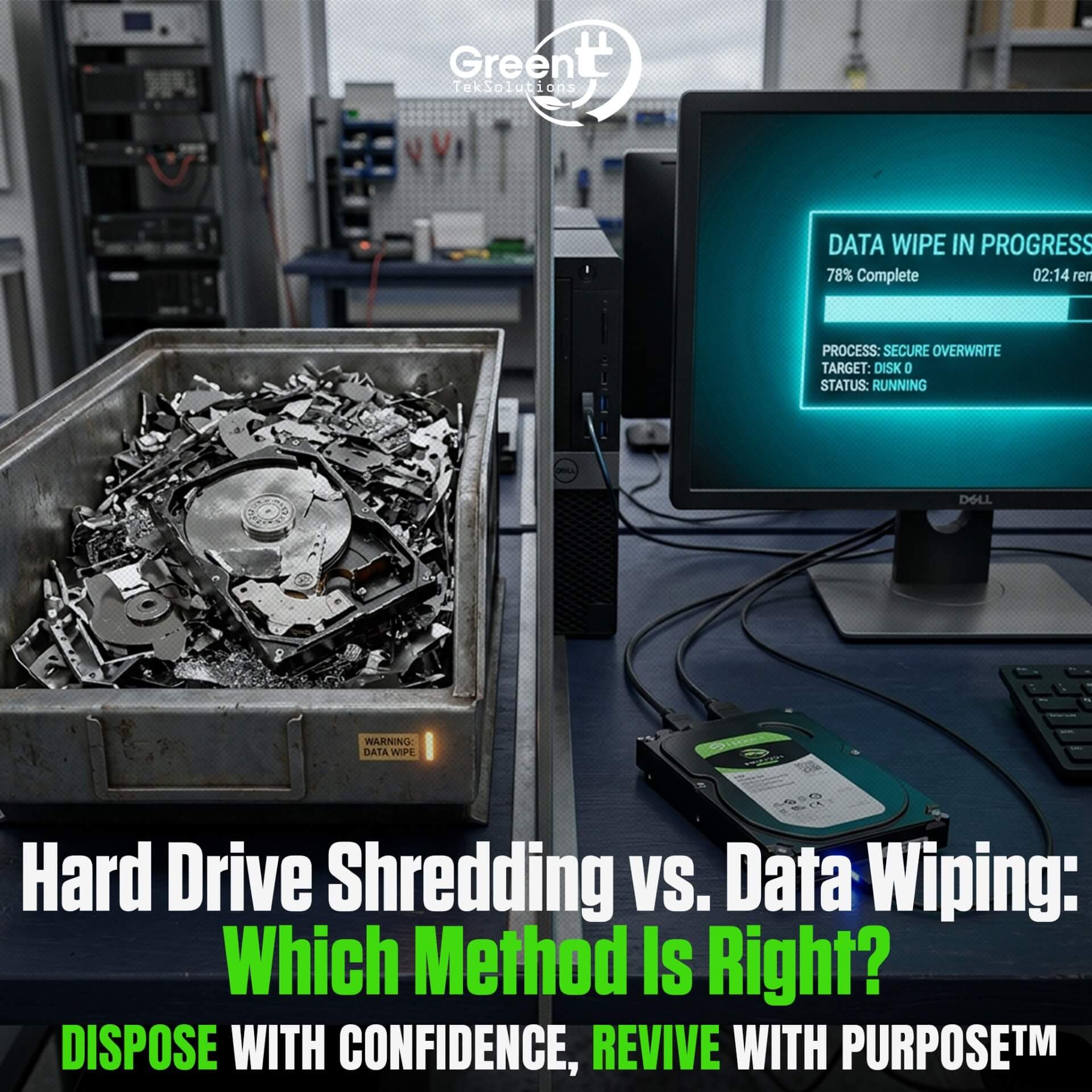
Two common methods are data wiping and hard drive shredding. While both can protect information, the right method depends on the condition, value, and intended disposition of the drive.
What Is Data Wiping?
Data wiping uses specialized software to overwrite information on a storage device so that the original data cannot be recovered through standard means. This is significantly more thorough than performing a factory reset or simply deleting files.
Secure data wiping can be particularly useful when a device remains functional and has potential resale or reuse value. Properly wiping the drive allows the equipment to continue through the ITAD process while helping protect the previous owner's information.
When Is Hard Drive Shredding Appropriate?
Hard drive shredding physically destroys the storage device, making the data inaccessible by destroying the media itself. Shredding can be appropriate when a drive cannot be securely wiped, is damaged or malfunctioning, or when a customer specifically requires physical destruction.
Shredding can also make sense when a device or storage component has little or no remaining monetary value and is destined for material recovery or recycling rather than resale.
Choosing the Right Data Destruction Method
The decision between data wiping and hard drive shredding should consider the condition of the equipment, security requirements, customer requirements, and whether the asset has potential value for reuse.
At GreenTek Solutions, secure data destruction is integrated into our ITAD process. By determining the appropriate method for each asset, organizations can protect sensitive information while maximizing the potential value of equipment that can be reused or recovered.
