
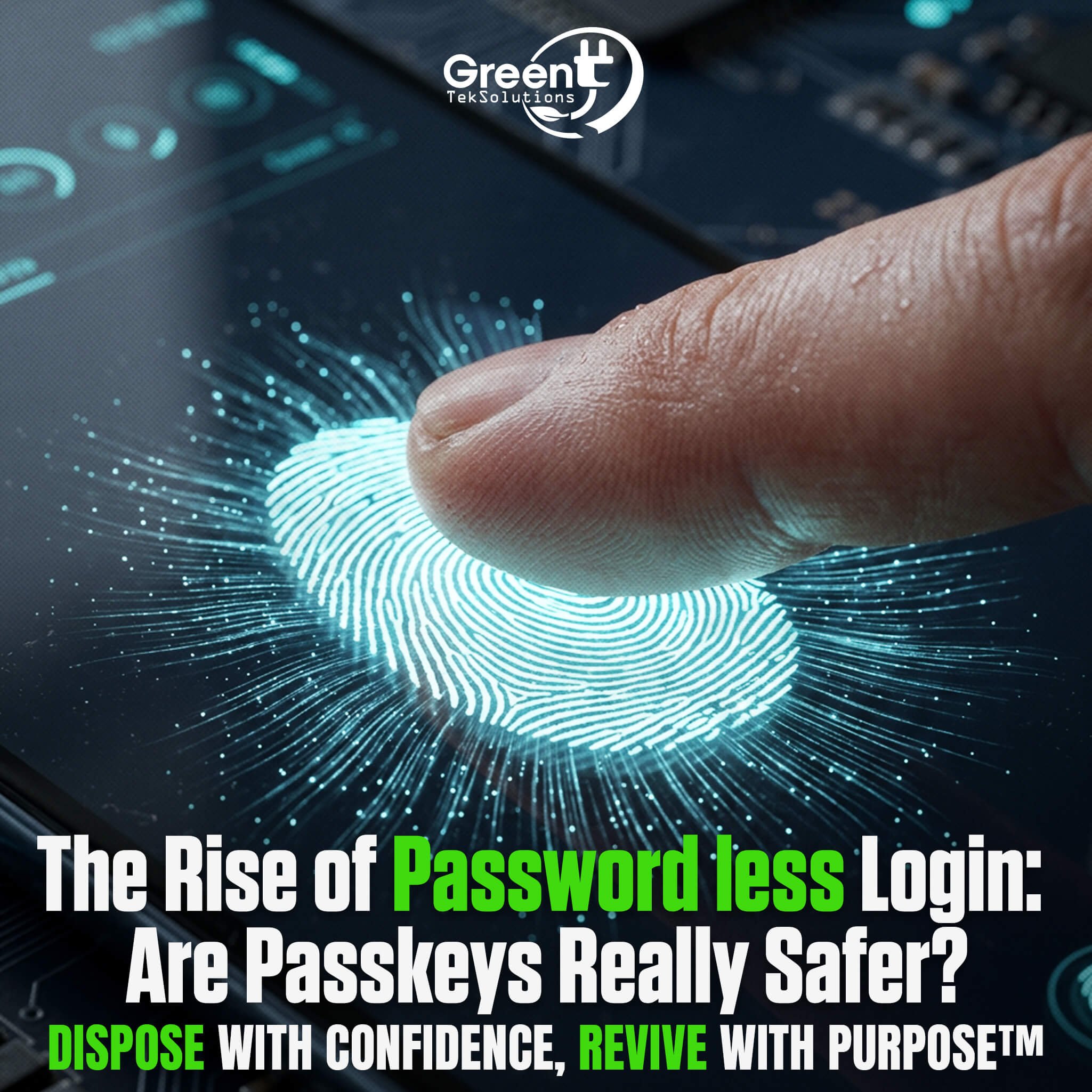
Passwords have been part of online security for decades, but managing them can be frustrating. People forget passwords, reuse them across accounts, and sometimes fall victim to phishing attacks.
That's why technology companies are increasingly promoting passwordless authentication, including passkeys.
What Are Passkeys?
Passkeys are a form of authentication designed to let users sign in without entering a traditional password.
Instead of remembering a password, users can authenticate using a device-based method such as a fingerprint, facial recognition, or device PIN. Passkeys use cryptographic technology to help verify the user without sending a traditional password to the website or service.
One major advantage is that passkeys can make phishing more difficult because they are designed to work with the website or service they were created for.
They can also eliminate the need to remember another complex password.
Are Passkeys Really Safer?
Passkeys can provide significant security benefits, but no technology completely eliminates security risks.
The security of an account still depends on the devices and accounts used to access it. Users should keep their devices updated, protect their primary accounts, and use strong device authentication.
Businesses adopting passwordless login should also consider how authentication is managed across company-owned devices.
This connects passwordless security to the broader technology lifecycle. When employees receive new laptops, phones, or other devices, organizations need processes for securely configuring, tracking, transferring, and eventually retiring those assets.
Professional IT asset disposition (ITAD) can help businesses securely manage devices when they reach the end of their lifecycle, including data sanitization, asset tracking, reuse, and responsible recycling.
Passkeys may represent an important step toward a more secure and convenient digital future—but strong security still requires responsible management of both accounts and the technology used to access them.
