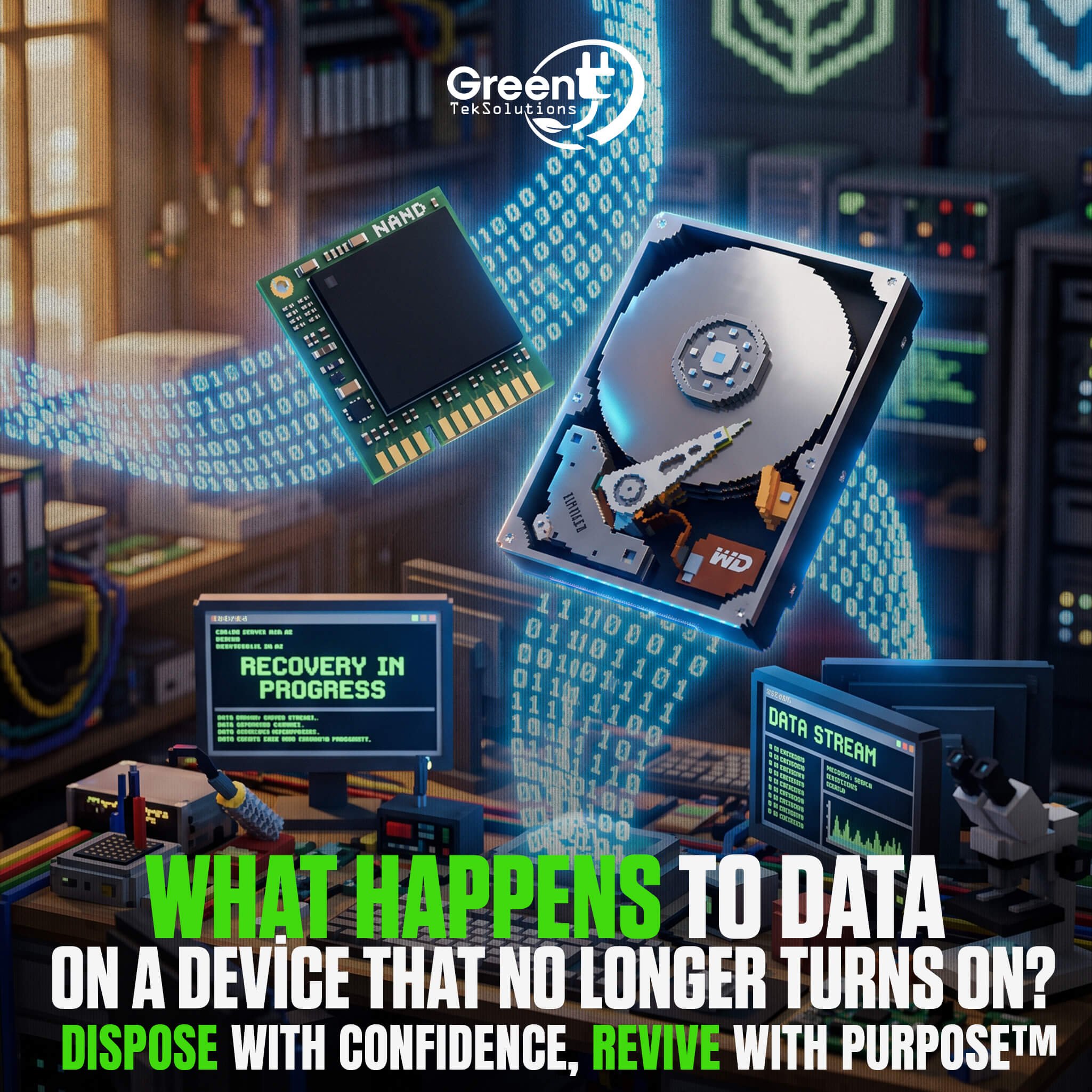
When a computer, server, hard drive, or other device stops working, you may think its data is no longer accessible. However, a device that will not turn on can still contain sensitive information. Never automatically consider a broken device a secure device.
Can you still recover the data?
Yes. A device does not need to function normally for its storage media to contain data. A damaged laptop may have a working solid-state drive, while a failed computer may still contain a functional hard drive.
Depending on the condition of the equipment, technicians may use specialized processes to access or recover the storage media. This is why simply throwing a non-working device away is not an appropriate data security strategy.
Data Sanitization for Non-Working Devices
When a device can still be processed electronically, organizations may use data sanitization methods designed to make stored information inaccessible.
For devices that cannot be sanitized through standard software-based methods, physical destruction may be appropriate. This can include the destruction of the storage media itself, depending on the organization's security requirements and applicable policies.
What About the Rest of the Device?
After we securely process the data-bearing components, the remaining equipment may still have value. Depending on their condition, we can potentially recover, reuse, remarket, or recycle components.
A professional IT asset disposition process can help organizations manage these steps while maintaining documentation and chain-of-custody controls.
Don't Assume Broken Means Secure
A device that no longer turns on is still an IT asset that may contain sensitive information. Treating broken technology as automatically secure can create unnecessary data security risks.
Before disposing of a non-working device, organizations should determine whether its data needs to be sanitized or whether the storage media requires physical destruction. A documented ITAD process can help businesses protect information while maximizing the remaining value of their retired technology.
