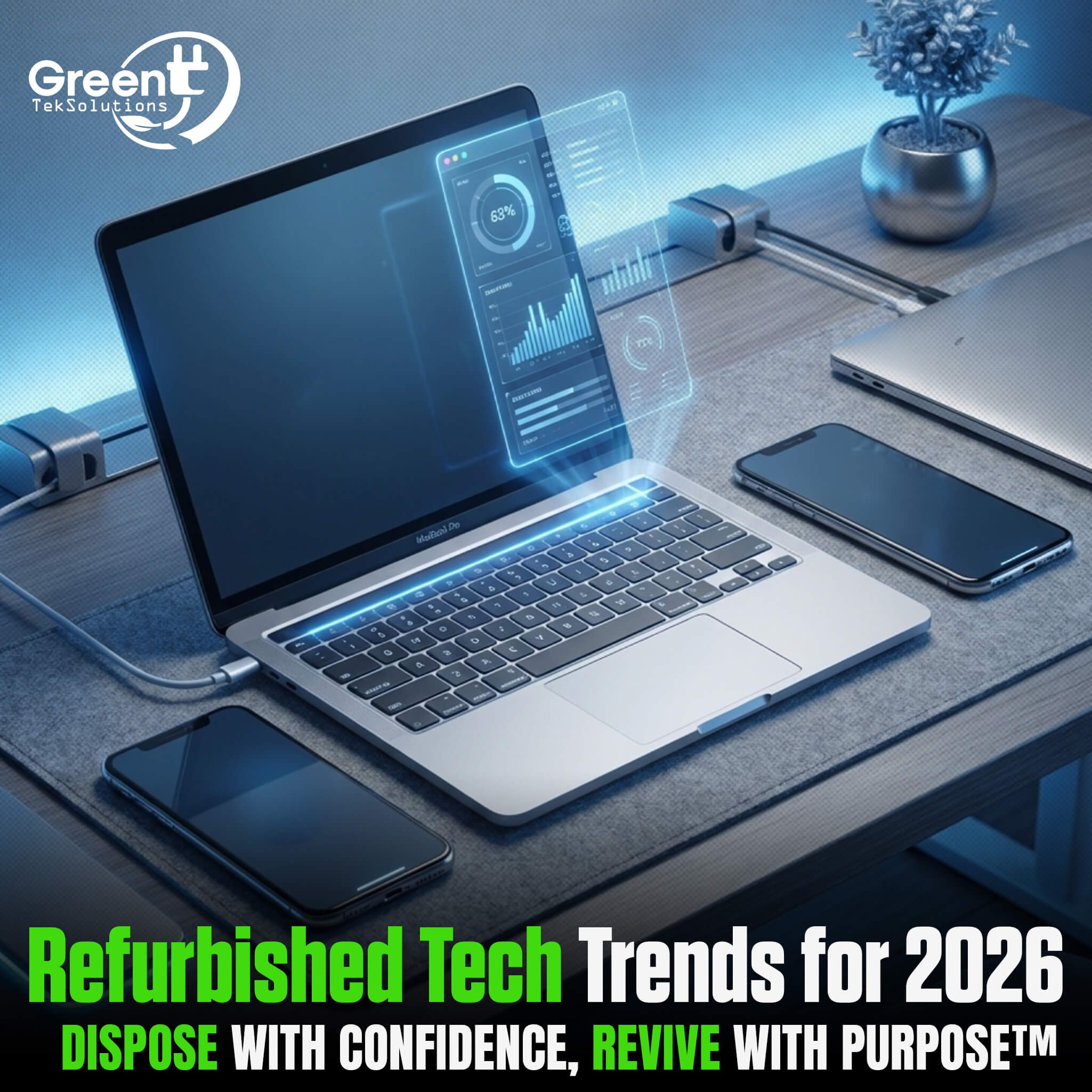
In 2026, refurbished electronics are no longer viewed as a fallback or budget-only option. Instead, they have become a core component of modern IT strategy and enterprise planning.
Rising hardware costs, shorter device lifecycles, and increasing sustainability expectations are all driving organizations to rethink how they source, manage, and retire technology.
As a result, refurbished technology and IT Asset Disposition (ITAD) services play a larger role. They help build cost-efficient and sustainable IT environments.
Rising Hardware Costs Are Driving Demand
Fluctuating hardware prices continue to put pressure on IT budgets. As organizations look for ways to control capital expenditures, many are turning to refurbished electronics as a practical solution.
Refurbished IT equipment can save about 30–50% compared to new equipment. It still offers reliable performance. This makes it an attractive option for businesses that need to scale efficiently while maintaining operational standards.
Faster Refresh Cycles Are Increasing Supply
Enterprise refresh cycles are getting shorter. Most organizations replace laptops, desktops, and mobile devices every three to five years. Performance requirements, security updates, and warranty limitations drive these cycles.
While this increases capital turnover, it also creates a steady supply of high-quality, enterprise-grade devices. These devices become available in the secondary market.
This growing supply improves availability and consistency in the refurbished technology sector. It makes it easier for organizations to adopt refurbished IT at scale.
Sustainability and ESG Goals Are Key Drivers
Sustainability is no longer optional in 2026; it is a business requirement. Organizations are under increasing pressure to reduce electronic waste (e-waste) and demonstrate measurable progress toward Environmental, Social, and Governance (ESG) goals.
Refurbished technology supports the circular economy by extending the life of IT assets. It also reduces the need for new manufacturing. Since manufacturing creates most of a device’s carbon footprint, reuse helps cut its environmental impact.
At the same time, global e-waste keeps growing faster than recycling efforts. This makes responsible IT asset management more important than ever.
Strong Market Growth Through 2030
The refurbished electronics market keeps growing, with strong growth expected through 2030 and beyond. Enterprise adoption, sustainability efforts, and demand for affordable technology drive this growth.
At the same time, the IT Asset Disposition (ITAD) market is growing rapidly.
GreenTek Solutions seeks better ways to redeploy, resell, and responsibly retire IT assets:
GreenTek Solutions helps organizations meet the growing demand for refurbished electronics.
It manages the full IT asset lifecycle, from secure collection to data destruction. It also handles refurbishment, resale, and responsible recycling.
Backed by industry-recognized certifications, GreenTek follows a strict zero-landfill policy. GreenTek reuses or resells retired IT assets.
This helps businesses recover value while supporting sustainability initiatives. When equipment reaches the end of its reuse life, GreenTek recycles the materials through approved downstream partners. The materials never go to landfills.
GreenTek supports businesses in all industries across Texas. It also supports charter and public-school districts, private institutions, and universities. Services range from routine device to refresh support to large, multi-site decommissioning projects. This approach allows organizations to turn retired equipment into an asset rather than a liability.
What This Means for Businesses
These trends create two clear opportunities:
- 1.Purchase refurbished equipment to reduce IT spending while supporting sustainability goals.
- 2.Resell or responsibly recycle retired devices to recover value and avoid storage or disposal risks.
Organizations that partner with experienced ITAD providers can capture both financial and environmental benefits.
In 2026, refurbished electronics are no longer an alternative—they are a standard part of modern IT planning.
Businesses that embrace refurbished technology and structured ITAD programs can reduce costs, improve sustainability performance, and stay competitive in a rapidly evolving technology landscape.
Here are SEO-optimized options for your page:
