
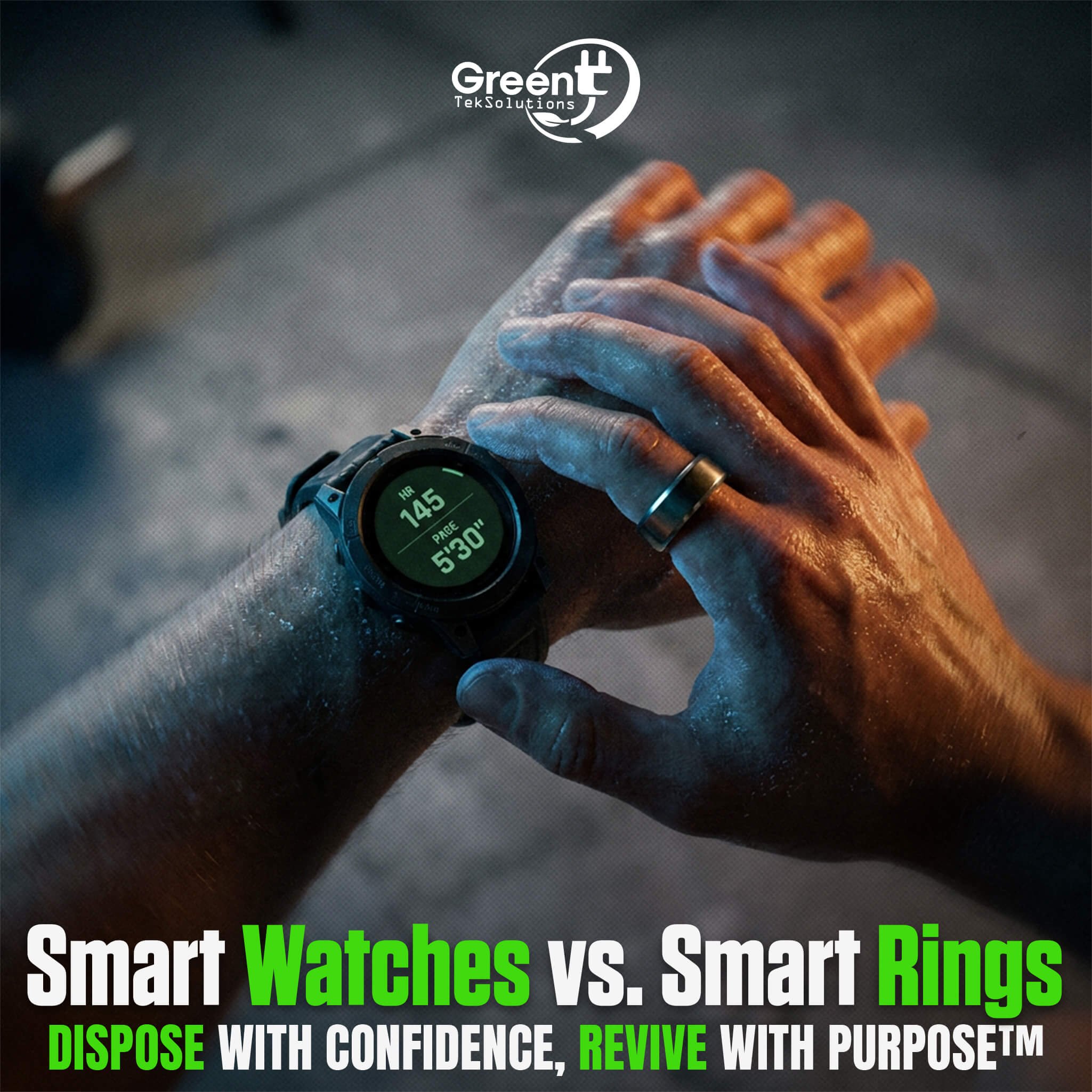
Wearable technology has evolved far beyond basic step counting. Today, smartwatches and smart rings track heart rate, sleep quality, blood oxygen saturation (SpO₂), activity levels, and long-term health trends. As adoption grows among consumers and organizations, an important question remains: which device is more accurate?
Accuracy matters when choosing a wearable, but it also plays a role in device replacement cycles, resale value, and sustainability. For individuals and businesses managing used electronics, understanding how wearables perform over time helps inform smarter purchasing, upgrading, and asset recovery decisions.
What Accuracy Means in Wearable Devices
In wearable technology, accuracy refers to how closely a device’s measurements align with clinical or reference grade equipment. While most smart watches and smart rings are not medical devices, many provide reliable trend-level health data.
Common metrics include:
- Heart rate
- Blood oxygen (SpO₂)
- Sleep duration and stages
- Activity and movement
- Temperature and recovery trends
Accuracy depends on sensor placement, device fit, motion, firmware updates, battery condition, and overall device age. Even high-quality hardware can produce inconsistent data if these factors degrade over time.
Smart Watches: Built for Fitness and Real-Time Tracking
Smartwatches are the most widely used wearables for fitness and activity monitoring. Brands such as Apple, Samsung, and Garmin continue to advance sensor technology and performance analytics.
Their larger form factor allows for components like optical heart-rate sensors, accelerometers, gyroscopes, built-in GPS, and ECG sensors on select models. Dedicated processors and batteries support higher sampling rates and deliver real-time feedback during workouts.
Smart watches generally perform well during walking, running, cycling, and structured training. However, loose fit, tattoos, rapid arm movement, or high intensity exercise can occasionally affect wrist-based readings.
Bottom line: Smart watches are best suited for fitness tracking, GPS workouts, and active performance monitoring.
Smart Rings: Optimized for Sleep and Baseline Health
Smart rings prioritize comfort and passive tracking, making them ideal for 24/7 wear. Finger placement often provides more consistent blood flow than the wrist, allowing for steadier readings—especially during sleep.
Rings shift less overnight, reducing motion interference, and their minimal design supports longer battery life. As a result, smart rings often perform well for resting heart rate, sleep stages, overnight SpO₂, and long-term recovery trends.
Most smart rings are not designed for intense workouts and usually lack GPS and real-time activity feedback.
Bottom line: Smart rings excel at sleep tracking and long-term health trend monitoring.
Accuracy Over Time, Resale, and Sustainability
Wearable accuracy can decline as devices age because of battery degradation, sensor wear, outdated firmware, or physical damage. Even so, many devices retain value through resale, refurbishment, or parts.
At GreenTek Solutions, we focus on responsible IT asset disposition and electronics buyback programs. While our core expertise is enterprise IT hardware, the wearable market reflects a broader reality: technology accuracy may decline over time, but asset value doesn’t disappear immediately.
By extending device life through reuse and responsible recycling, organizations can recover value while reducing electronic waste.
Final Takeaway
Smart watches and smart rings are accurate in different ways. Smart watches excel at active tracking, while smart rings provide cleaner baseline health data. Understanding these differences—and how device accuracy changes over time—helps consumers and organizations make informed decisions about purchasing, upgrading, and reuse.
If your organization is evaluating used electronics or managing surplus assets, GreenTek Solutions can help assess value and support sustainable outcomes.
