
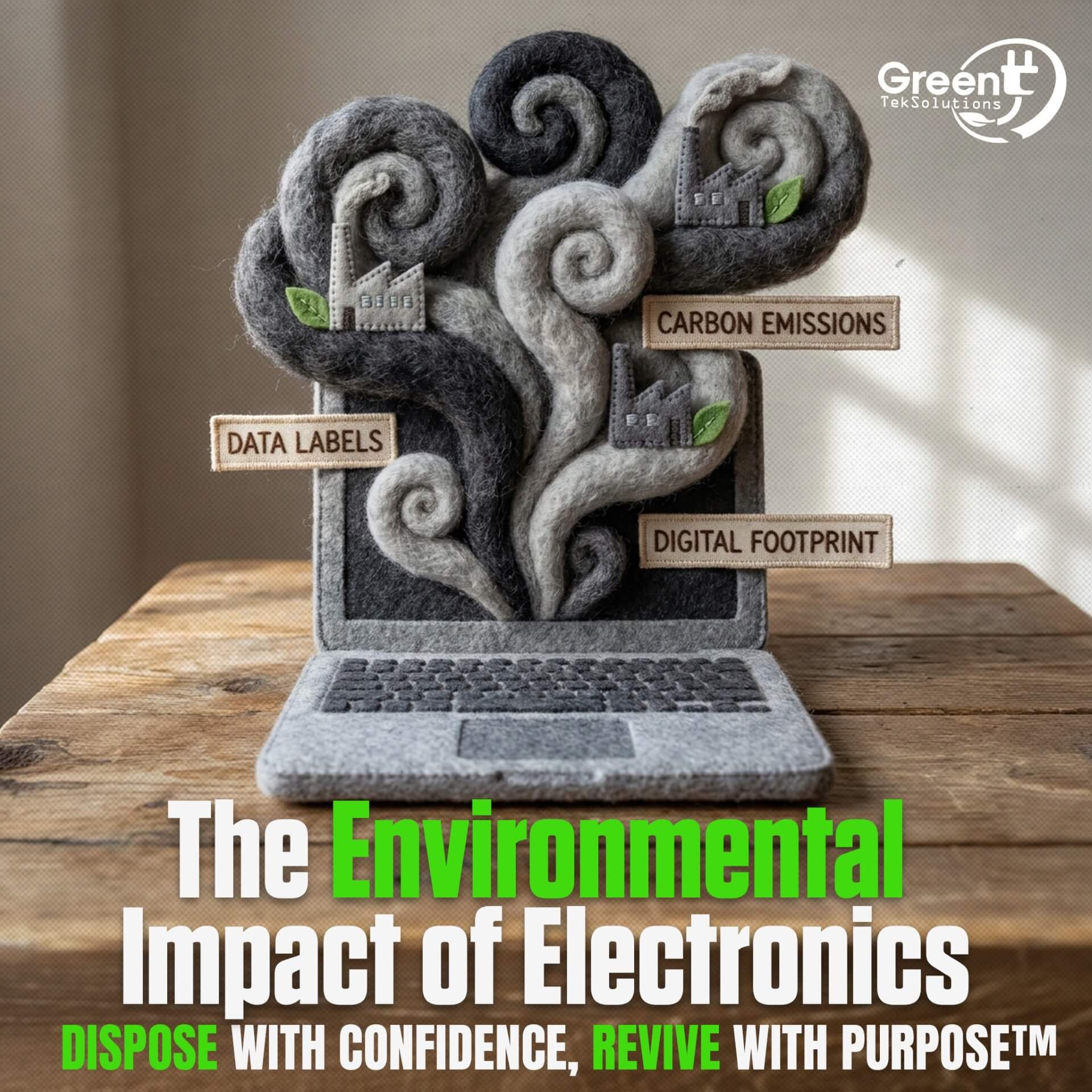
The Growing Environmental Impact of Electronics
Electronics power nearly every aspect of modern business. From laptops and smartphones to servers and networking equipment, technology has become essential for communication, productivity, and operations.
However, the rapid growth of electronic consumption has also created a major environmental challenge.
Electronic waste, commonly known as e-waste, is now one of the fastest-growing waste streams globally. Businesses upgrade devices more often than ever. They often replace equipment long before it reaches the end of its useful life.
Without proper disposal and recycling practices, outdated electronics can contribute to environmental pollution, resource depletion, and increased carbon emissions.
At GreenTek Solutions, we help organizations build more sustainable technology practices through responsible IT asset disposition, electronics recycling, and refurbished technology solutions.
Understanding the Environmental Cost of Electronics
Every device has a lifecycle:
- Production: Mining rare materials and energy-intensive manufacturing
- Usage: Energy consumption and maintenance
- Disposal: E-waste and hazardous materials
Improper disposal can release toxins into soil and water, posing serious environmental risks.
The environmental impact of electronics begins long before devices reach consumers or businesses. Manufacturing electronics requires the extraction of rare earth minerals and valuable metals through large-scale mining operations. These processes can contribute to deforestation, habitat destruction, water pollution, high energy consumption, and increased greenhouse gas emissions.
As demand for new devices continues to rise, so does the environmental strain associated with sourcing raw materials. Extending the life of existing electronics through reuse, repair, and refurbishment reduces the need for more resource extraction. It also supports more sustainable technology practices.
In addition to mining, the manufacturing and distribution of electronics generate a significant carbon footprint. Producing new devices involves raw material processing, factory production, global transportation, packaging, and distribution, all of which require substantial energy and resources. By reusing and refurbishing electronics instead of replacing them often, businesses can cut emissions from making new equipment.
Improper disposal also creates serious environmental risks, as electronic waste placed in landfills can leak hazardous materials into the soil, groundwater, and surrounding ecosystems. Responsible electronics recycling helps prevent harmful substances from entering the waste stream while supporting a more sustainable, circular economy.
What Businesses Can Do to Reduce E-Waste
- Extend Device Lifecycles
- Implement an IT Asset Disposition (ITAD) Strategy
- Choose Refurbished Technology
- Recycle Electronics Responsibly
- Educate Employees About
Small operational changes across an organization can create a meaningful environmental impact. Sustainable technology practices are not only good for the environment — they also provide measurable business advantages. Businesses support this shift by making smarter technology choices. They also partner with responsible ITAD providers.
Sustainable technology management is no longer optional — it is becoming an essential part of responsible business operations.
Contact GreenTek Solutions today to learn how your organization can build a more sustainable approach to technology management.
