When businesses refresh their technology, replacing outdated equipment is only part of the process. What happens to the retired assets can also have a financial impact. Laptops, servers, networking equipment, storage systems, and other IT assets may still have resale value after they are no longer needed internally.
Understanding technology resale value can help businesses make better decisions about when to refresh equipment and how to manage retired IT assets.
The resale value of used technology depends on several factors. These factors include type, age, condition, and specifications. It also depends on the brand, market demand, and how fast you sell it. Because technology markets change quickly, an asset that has value today may be worth significantly less after sitting in storage for months.
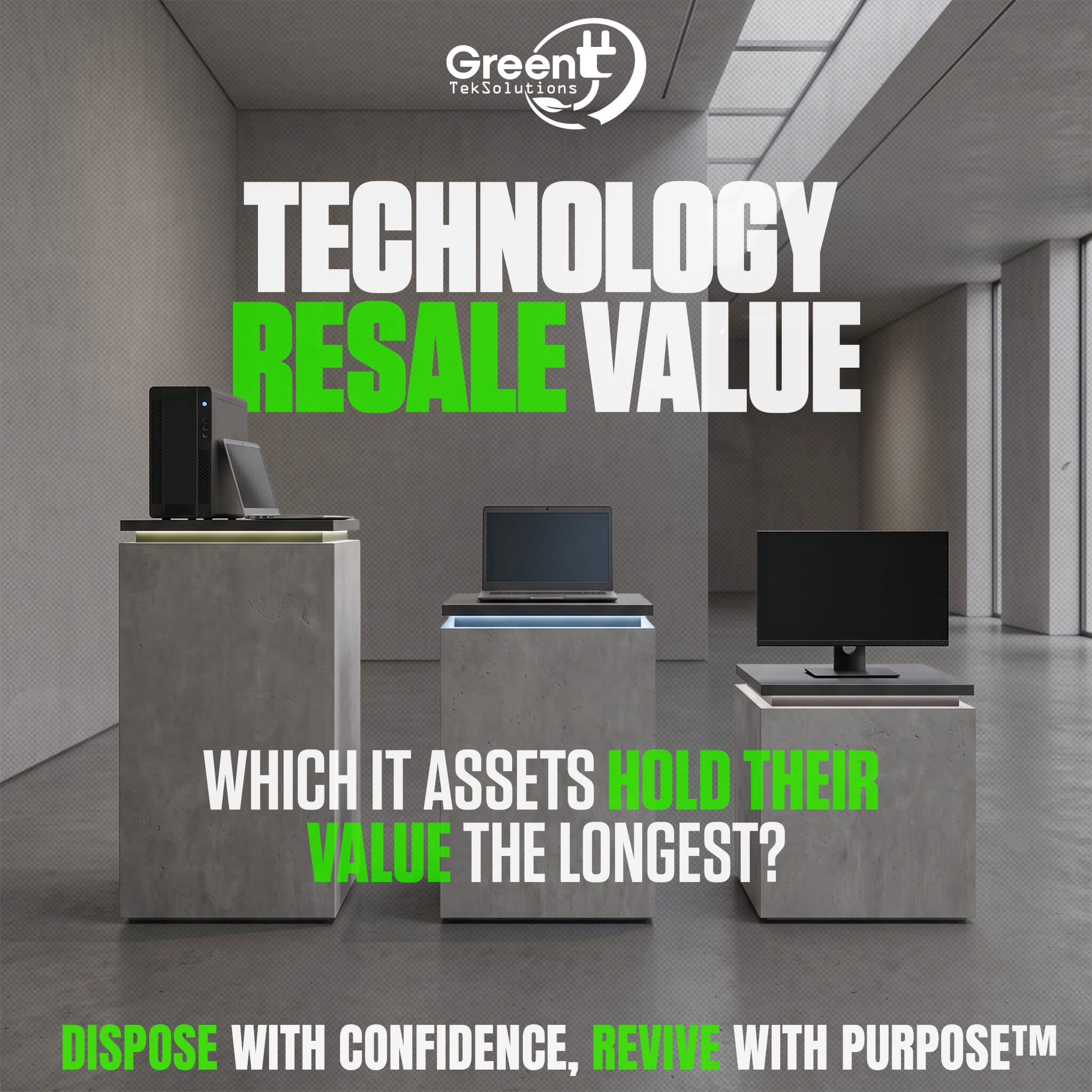
Which IT Assets Typically Hold Their Value?
Not all technology depreciates at the same rate. Enterprise servers, networking equipment, business laptops, storage systems, and specialized hardware can all have active secondary markets, but their resale value depends heavily on current demand.
Servers can retain meaningful value when they are relatively recent and have desirable configurations. Processor generation, memory capacity, storage configuration, form factor, and brand can all influence what buyers are willing to pay. Recent enterprise servers from makers like Dell and HPE may still be in demand. This can happen even after a business replaces them with newer equipment.
Networking equipment can also have resale value, particularly when the hardware remains supported and there is continued demand for the specific model. Switches, routers, firewalls, and other networking hardware can remain useful to organizations looking for more affordable alternatives to new equipment.
Business laptops and desktops are another common category for IT resale. Their value is generally influenced by processor generation, memory, storage, physical condition, battery health, and overall configuration. Premium business-class devices may have stronger resale demand than lower-spec consumer hardware.
Specialized equipment can also have significant value depending on market demand. High-performance workstations, storage systems, graphics hardware, and other specialized technology may attract buyers even after they have reached the end of their original business use.
What Determines Technology Resale Value?
Age is one of the most important factors affecting technology resale value. Newer equipment often has access to a larger secondary market. Buyers can find up-to-date specifications, parts, and support from the manufacturer.
Configuration matters just as much. Two servers with the same model number may have very different values depending on their processors, RAM, storage, drive configuration, and other components. Keeping accurate asset records can therefore make it easier to evaluate equipment when it is time to sell.
Condition also plays a major role. Equipment that is fully functional, tested, complete, and in good physical condition can be easier to remarket than equipment with missing components or unknown functionality.
Market demand can change the equation as well. Technology resale markets respond to supply, demand, new product releases, component availability, and changes in how businesses use technology. This is one reason why waiting too long to evaluate retired equipment can reduce potential recovery value.
Why Timing Matters?
Businesses sometimes hold onto retired technology because they are not ready to decide what to do with it. While storage may seem harmless, technology can lose value while it sits unused.
As newer generations enter the market, older equipment can become less desirable. Manufacturer support can also change, and certain components may become harder to source. Selling equipment while there is still active secondary-market demand can give businesses more opportunities to recover value.
A structured IT asset disposition (ITAD) process can help businesses evaluate equipment, securely process data-bearing devices, identify assets suitable for reuse or resale, and responsibly handle equipment that no longer has meaningful market value.
How IT Buyback Programs Can Help Recover Value
An IT equipment buyback program can provide businesses with a more structured way to manage retired technology. Instead of treating every device as waste, businesses can have equipment evaluated to determine whether it can be reused, resold, harvested for components, or recycled.
A professional IT equipment buyback program can also simplify the process when a business is retiring equipment in larger quantities. Rather than trying to sell individual devices through multiple channels, businesses can work with an experienced ITAD provider to manage the equipment as part of a broader disposition strategy.
Before equipment is resold, data security should also be addressed. Devices that previously belonged to a business may contain sensitive information, making secure data sanitization an important part of responsible technology resale.
Turning Retired Technology Into Recovered Value
The value of used IT equipment does not disappear simply because a business no longer needs it. Servers, laptops, desktops, networking equipment, and other technology may still have a place in the secondary market.
The key is knowing what the equipment is worth, understanding current market demand, and having a process for evaluating and securely preparing assets for their next use.
At GreenTek Solutions, businesses can use IT asset disposition and asset recovery services to help determine the appropriate next step for retired technology. Equipment with resale potential can be prepared for remarketing, while assets that have reached the end of their useful life can be directed toward responsible recycling.
A thoughtful approach to technology resale can help businesses recover more value from their IT investments while keeping retired equipment in circulation for as long as it remains useful.
