
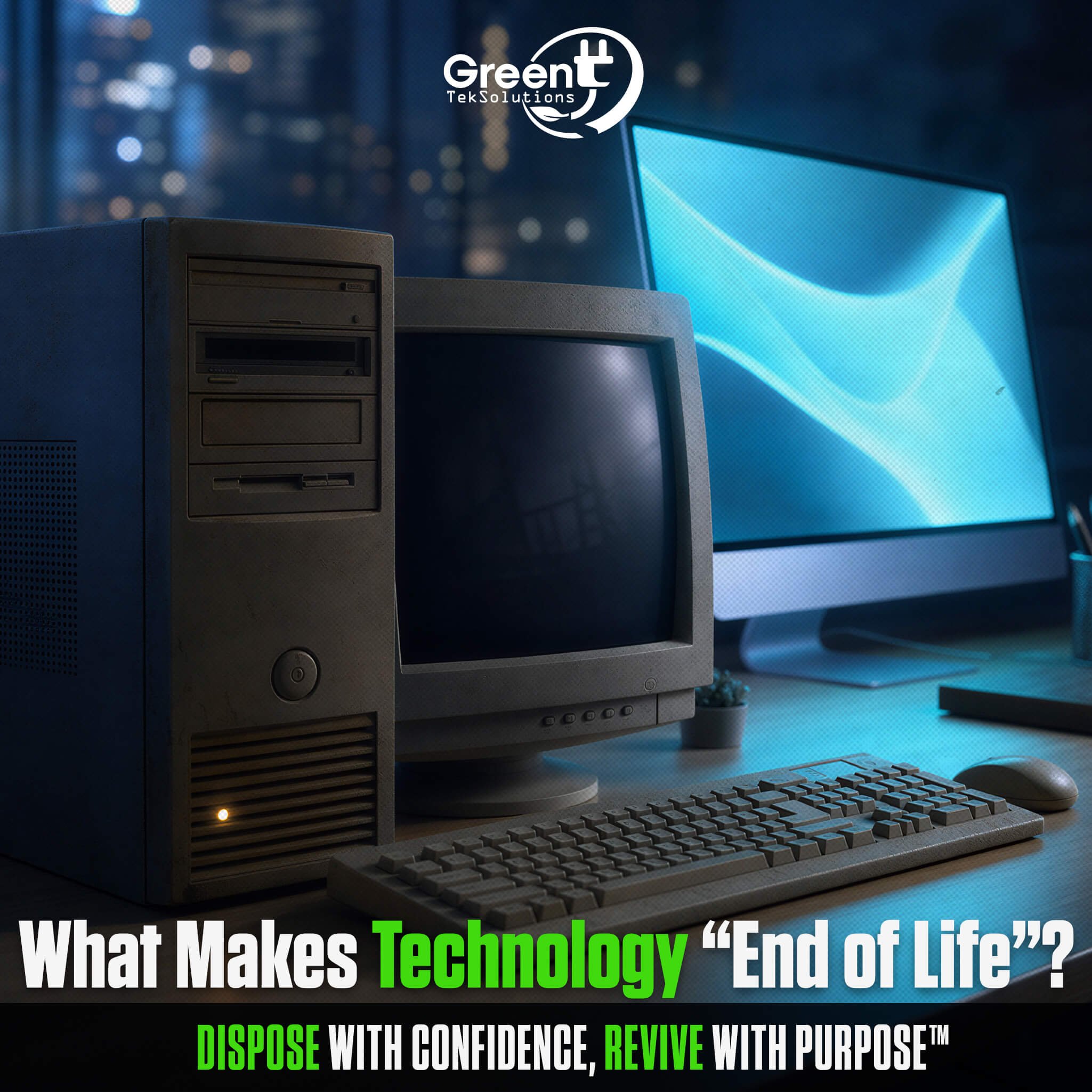
Technology does not become obsolete overnight. For businesses, IT equipment reaches its end of life when it cannot meet operational needs. It also may not maintain acceptable performance or get the support needed for continued use.
Understanding the signs that IT equipment is nearing the end of its life helps organizations. It helps them plan upgrades. It helps them manage security risks. It also helps them decide what to do with retired technology.
End of life (EOL) refers to when a manufacturer ends support for a product. It can also mean an organization decides equipment no longer meets its needs.
End of Life vs. End of Support
These terms are related but not identical. End of life can refer to a product reaching the end of its commercial lifecycle, while end of support means the manufacturer has stopped providing certain services, such as software updates, security patches, or technical assistance.
The exact meaning depends on the manufacturer and product. Businesses should review vendor announcements and support policies before deciding whether to retire equipment.
4 Signs Your IT Equipment May Be at End of Life
Several factors can indicate that technology is approaching the end of its useful life.
- Limited Manufacturer Support: When security updates and technical support end, equipment may become more difficult to maintain securely. Organizations should assess the risks before continuing to use unsupported systems.
<li><strong>Declining Performance:</strong> Older servers, computers, and storage systems may struggle to support modern applications or growing workloads, affecting productivity and reliability.</li>

<li><strong>Rising Maintenance Costs:</strong> Frequent repairs, replacement parts, and downtime can make older equipment increasingly expensive to operate compared with newer alternatives.</li>

<li><strong>Changing Business Requirements:</strong> An organization may outgrow its existing infrastructure due to increased storage needs, new software, cybersecurity requirements, or expansion.</li>
What Should Businesses Do With End-of-Life Technology?
Reaching end of life does not automatically mean equipment is worthless. Its next step depends on its condition, remaining market value, security requirements, and potential for continued use.
Functional equipment may be eligible for refurbishment or resale. Devices that cannot be reused may be directed toward responsible electronics recycling. Before equipment leaves an organization's control, businesses should also address sensitive data through appropriate sanitization or physical destruction procedures.
A structured IT Asset Disposition (ITAD) program can help businesses manage these steps while maintaining asset tracking and documentation. Recognizing end-of-life technology early helps businesses plan replacements, reduce risks, and manage retired assets more effectively.
With the right process, organizations can protect sensitive information, identify potential financial recovery opportunities, and reduce electronic waste.
Contact GreenTek Solutions to explore options for managing end-of-life IT equipment responsibly.
