
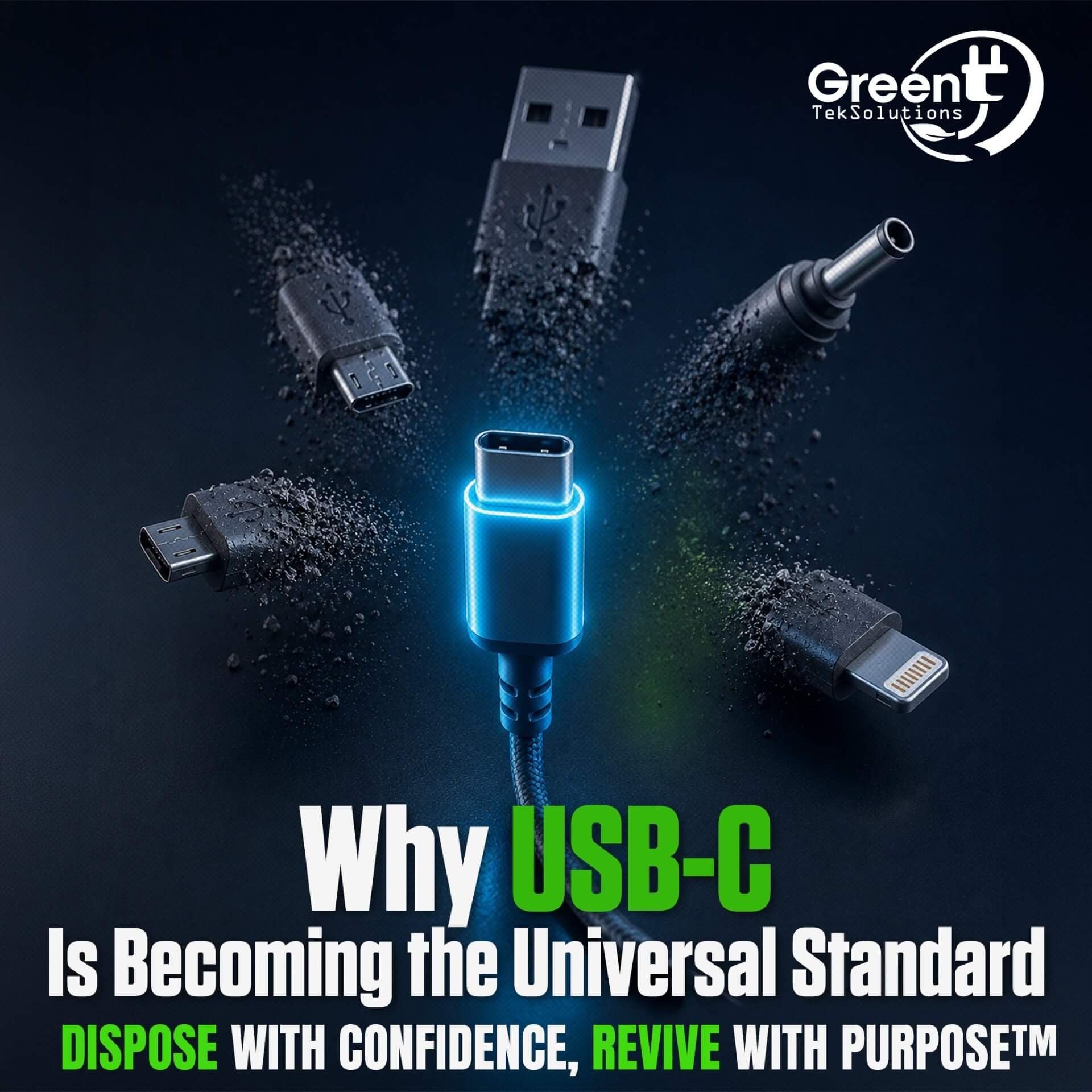
For years, consumers and businesses have dealt with a frustrating mix of charging cables and connectors for different devices. Smartphones, laptops, tablets, and accessories often require their own proprietary chargers, creating unnecessary clutter and making it difficult to manage technology efficiently. Today, that is changing as USB-C becomes the universal standard for charging, data transfer, and connectivity across a growing number of devices.
USB-C has gained widespread adoption because it offers a single connector that can handle multiple functions. In addition to charging devices, USB-C supports high-speed data transfer, video output, and connections to monitors, docking stations, and external storage. Its reversible design also makes it easier to use than older USB connectors, eliminating the frustration of plugging cables in the wrong way.
For businesses, the shift to USB-C offers significant advantages. Standardizing one connector reduces the number of chargers, adapters, and replacement cables that IT departments need to purchase and manage. Employees can often use the same charger for multiple devices, simplifying workstation setups and making hybrid work environments more efficient. As organizations refresh their technology, choosing USB-C-compatible devices can also improve long-term compatibility across their IT infrastructure.
Another reason USB-C is becoming the universal standard is its ability to support faster charging and better performance. Modern USB-C connections can deliver enough power to charge everything from smartphones to high-performance laptops while also transferring large files at high speeds. This versatility allows a single cable to replace several different types of connectors, making everyday technology simpler and more convenient.
The growing adoption of USB-C also supports sustainability efforts. In the past, purchasing a new device often meant receiving another charger, even when an existing one still worked. Over time, these extra accessories contributed to electronic waste as older chargers became obsolete. With more manufacturers using USB-C, consumers and businesses can continue using compatible chargers across multiple devices, reducing unnecessary purchases and extending the life of existing accessories.
As organizations replace older equipment with USB-C devices, they also face the challenge of responsibly managing retired technology. Laptops, smartphones, tablets, docking stations, and accessories that are no longer needed should be handled through a secure IT asset disposition (ITAD) process rather than being discarded. Certified ITAD providers help businesses protect sensitive data through secure data destruction while maximizing opportunities to refurbish, remarket, or responsibly recycle retired equipment. This approach supports both sustainability goals and regulatory compliance.
USB-C represents more than just a new charging port. It reflects a broader move toward simpler, more compatible technology that benefits both users and businesses. As manufacturers continue adopting the standard, organizations can expect reduced complexity, improved device compatibility, and less electronic waste. Planning for this transition and partnering with a trusted ITAD provider when retiring older equipment helps businesses manage the entire technology lifecycle securely and sustainably.
As USB-C continues to replace older connectors, it is clear that the universal standard is shaping the future of connected devices. For organizations investing in new technology, embracing USB-C can simplify device management today while supporting a more efficient and sustainable IT environment for years to come.
